
Quick Overview to Peristaltic Pumps
Published by ELEXAN Scientific on Dec 29th 2025
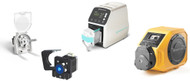
Peristaltic pumps facilitate fluid metering and delivery across diverse industries, ranging from laboratory research and medical devices to large-scale manufacturing. Thanks to their inherent versatility, peristaltic pumps are available as turnkey, user-friendly systems or as bare assemblies for integration into custom equipment. The main components consist of a motor drive, a roller-equipped pump head, and flexible tubing. During operation, the motor rotates the rollers to compress the tubing, inducing positive displacement volumetric priming.
Why use a peristaltic pump?
Peristaltic pumps are exceptionally popular for sterile or corrosive liquid handling because the liquid never comes in direct contact with the pump. Instead, the liquid remains entirely within the tubing and greatly minimizes the risk of cross-contaminization.
This post covers general concepts you may find useful in choosing a peristaltic pump for laboratory or industry use!
Motor Drive
The motor drive and controller serves as the core of a peristaltic pump system.
Common motors used for peristaltic pumps include DC, Stepper, and AC motors. Brushed DC motors have the lowest cost and perfect for simple transfer or dosing where precision is not critical. Brushless DC motors are also relatively low cost but have improved service life and low noise. Stepper motors can be equipped with encoders and are best for high-precision dosing or high-accuracy flow rate requirements. Finally, AC motors are suited for high flow rate, high pressure requirements used in heavy-duty industrial applications. A summary table between the different motor types is provided below with example applications:
| Brushed DC | Brushless DC | Stepper | AC | |
| Cost | $ | $$ | $$ | $$$ |
| Performance | + | ++ | +++ | ++ |
| Example Use | Consumer Coffee Machines | Dialysis Machine | High-precision Filling/Laboratory Use | Waste Water Treatment |
Pump Head
The pump head houses the rollers which contact and compress the tubing to generate liquid flow. Many different pump head designs are available which allow for different trade offs between flow stability, environmental factors, and service life.
Roller Configuration and Pulsation Control
The number of rollers in a pump head directly impacts flow stability and tubing longevity:
- High Roller Count: Utilizing more rollers helps improve stability for low-flow applications (<1 mL) where minimizing pulsation is critical for accuracy.
- Service Life Trade-off: Increasing the number of rollers improves flow consistency but can lead to accelerated tubing fatigue due to higher frequency of compression cycles.
Compression Mechanisms & Tubing Compatibility
To ensure efficient volumetric displacement, the pump head must match the specific wall thickness of the tubing.
- Fixed Rollers: These provide a constant compression level. They are the industry standard due to their mechanical simplicity and reliability.
- Spring-Loaded Rollers (Automatic Pressure Compensation): These rollers adjust dynamically to compensate for tubing wear. This maintains a steady flow rate over longer periods and extends the intervals between maintenance.
Tube Housing Design
The housing provides the structural counter-pressure necessary for fluid movement. Selection depends on your environmental sealing and maintenance requirements:
- Fully Enclosed Housings: Offer maximum protection against dust, debris, and moisture. These are ideal for IP-rated or sterile environments.
- Partially-Open Housings: Designed for rapid maintenance, allowing for tool-free tubing replacement and quick visual inspections.
Material Selection in Pump Construction
Both rollers and housings can be made from metals or plastics for specific applications:
- Industrial Grade (Metal): Aluminum housings and stainless steel (SS) rollers are the premier choice for harsh factory floors. They are rugged, chemical-resistant, and built for spray-down wash-down protocols.
- Instrument Grade (Plastic): Components made from PPS, ABS, or Polycarbonate (PC) are ideal for portable medical devices or integrated laboratory instruments where lightweight construction and cost-efficiency are prioritized.
Tubing
The tubing is the main 'engine' of the pump. Because it is the only component in contact with the liquid media, selecting the correct material and size is vital for chemical compatiblity and precision flow.
Role of Wall Thickness
Wall thickness determines the "spring-back" or restitution of the tube. When rollers compress the tubing, the material must quickly return to its original shape to create the vacuum necessary for self-priming.
- Thin-Wall Tubing (1.6 mm): Generally used for smaller, lower-pressure applications. While easier for smaller motors to compress, it may have a shorter service life in high-speed operations.
- Thick-Wall Tubing (2.4 mm+): Provides stronger suction lift and can handle higher-viscosity fluids. It is also more resistant to "collapsing" under high-pressure conditions.
Tubing Material
Several different tubing materials are available with different chemical resistance. Some popular tubing materials include:
- Silicone (Platinum-Cured): The all-rounder for low-cost, non-aggressive fluid handling.
- Fluoroelastomers (Viton): Necessary for aggressive chemical handling, as they resist degradation from oils, fuels, and solvents.
- PharMed® BPT: Go-to standard for pharmaceuticals and bioprocesses due to inertness and low tubing degradation.
Choosing the right peristaltic pump and tubing is essential for successful liquid processing. Contact us at info@elexansci.com and we'll help you configure the best peristaltic pump for your application!